Bushwick
Loft Space.
Tell us once what you're after — including the floors that never hit the listing sites. A person reads it. That's the whole thing.
Seven questions.
That's the whole thing.
Under two minutes. No account, no login. A person reads every one.
How much room do you need?
Flushing to Conway, Broadway to Cypress — brewery blocks, knitting mills and the industrial corridor that never stopped working.
A brewery town that never stopped making things.
1661 → today
Boswijck — town in the woods
Peter Stuyvesant charters Boswijck as one of the six original Dutch towns of Brooklyn. It stays farmland for nearly two centuries, crossed by two colonial roads that are still here: Flushing Avenue and Broadway.
The Germans arrive
Immigrants from the German states settle along Bushwick and Myrtle Avenues, bringing both labor and trade skill. Peter Cooper builds his first glue factory here — the beginning of Bushwick as a place that makes things.
Brewer's Row
Drawn by clean water from the Ridgewood aquifer and by the rail lines, German brewers build until as many as fourteen breweries are running inside a fourteen-block stretch. Bushwick becomes the beer capital of the Northeast, and brick-vaulted lagering cellars go in under the streets — a lot of them still down there.
The Ulmer Brewery
William Ulmer builds his complex at Beaver and Belvidere in German round-arch style, mostly to Theobald Engelhardt's designs — office, brew house, engine house, stable. In 2010 it becomes the first brewery in the city to be landmarked.
Mills follow the brewers
Knitting mills, garment shops, foundries and chemical works fill in around the breweries, hiring the same immigrant workforce. The brick loft buildings from these decades are the studio and office stock you tour today.
The last two close
Schaefer and Rheingold shut within months of each other, ending some 120 years of brewing. The blackout the following summer and the looting along Broadway accelerate a decline that takes two decades to bottom out.
Artists cross Flushing Ave
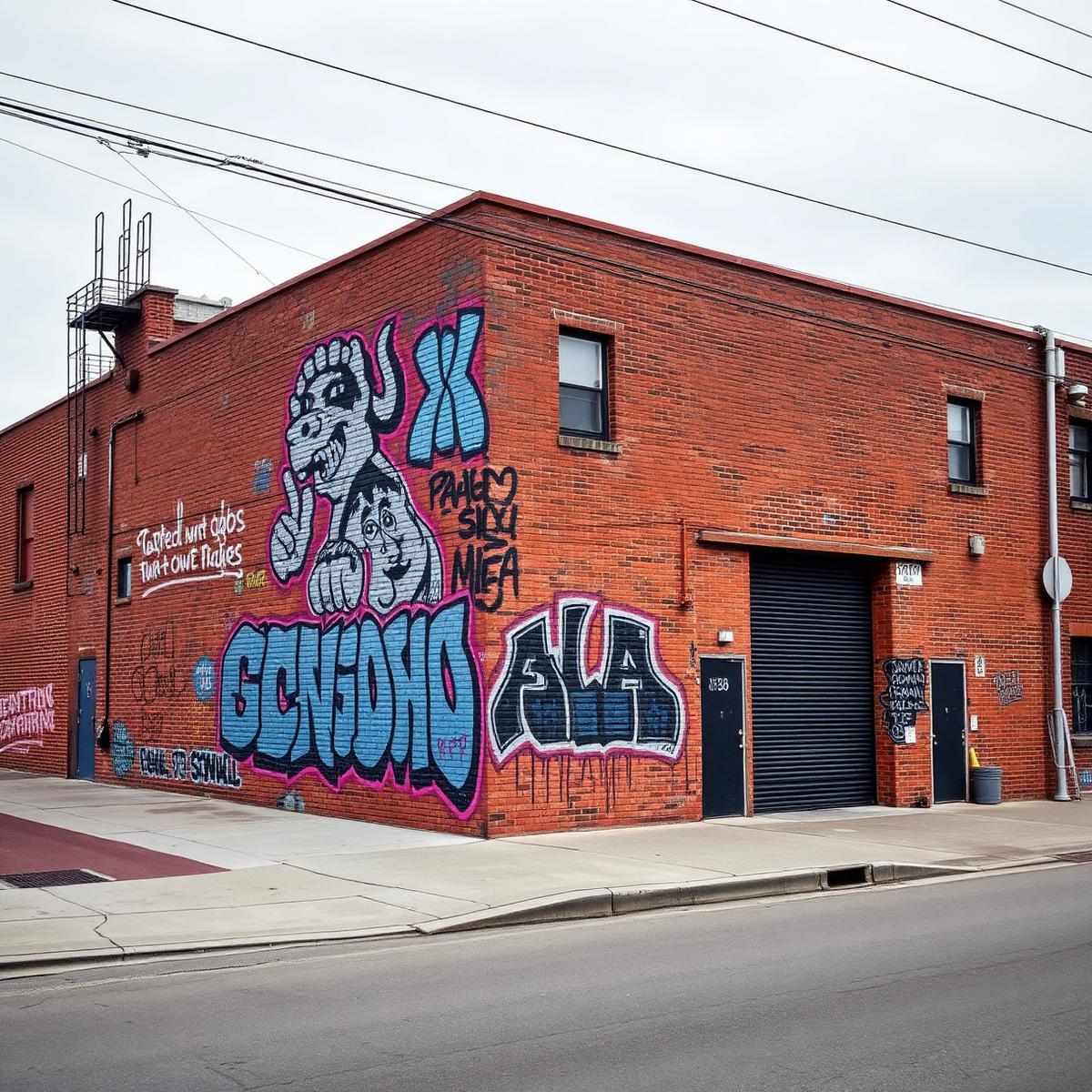
Priced out of Williamsburg, painters, fabricators and musicians take the cheap mill floors around Morgan and Jefferson. In 2012 the Bushwick Collective starts putting murals up on Troutman Street and the neighborhood's second reputation begins.
Studios, stages, and shops that still make things
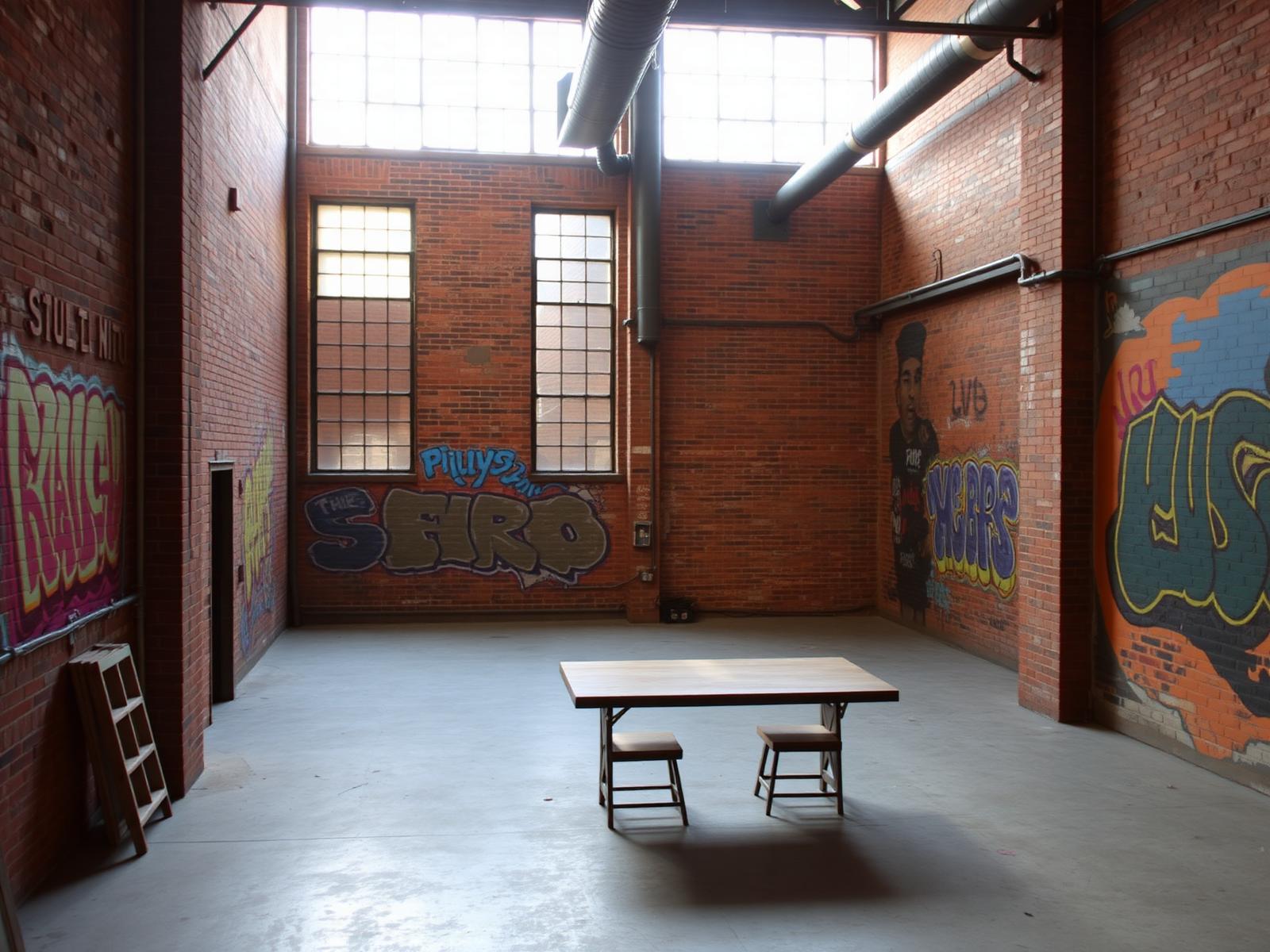
More working artist studios than anywhere else in the city, a deep fabrication base inside the Industrial Business Zone, venues like House of Yes and Elsewhere, and rents that still let a small shop take a whole floor. The least expensive real loft space in north Brooklyn.
Who you'd be sharing the block with.
- The Bushwick Collective murals (Troutman St)
- Open-studio galleries on Wilson and Troutman
- Painting and sculpture studios off Morgan
- Ceramics studios near Johnson Ave
- House of Yes (Wyckoff Ave)
- Elsewhere (Johnson Ave)
- Avant Gardner / Brooklyn Mirage (Stewart Ave)
- Mood Ring (Myrtle Ave)
- Roberta's (Moore St)
- Sey Coffee (Seigel St)
- Syndicated (Bogart St)
- Faro (Jefferson St)
- Bakeries and bodegas on Knickerbocker
- Metal and wood shops on Scott and Porter
- Set and scenic shops off Johnson Ave
- Screen printers near Randolph St
- Small-batch food producers in the IBZ
- Soundstages off Stewart Ave
- Grip and lighting houses on Porter Ave
- Photo studios in the Morgan corridor
- Production offices on Bogart
- Vintage and secondhand on Wyckoff
- Independent design showrooms on Bogart
- Plant and homeware shops on Knickerbocker
- Record shops off Myrtle
Why bother
The best floors are gone before they're listed. Character space moves through people, not portals — so we do it the other way around. You tell us what you'd love. We keep an eye out.
You told us what you need. That's where it ends.
No newsletter, no CRM queue, no "just checking in." A person reads your brief and reaches out directly when a floor's worth showing you.
- 01
We never sell, share or rent your brief — not to landlords, not to other brokers, not to a data company.
- 02
No newsletters or mass blasts. When we get in touch, it's a direct email or text about a specific space.
- 03
A person reads it. Not a bot, not a queue in some CRM.
- 04
Tell us to stop and we stop. Simple as that.
The Definitive Guide to Bushwick Industrial Lofts
Brewery masonry, knitting-mill floors, and the industrial corridor where whole floors are still affordable.
Bushwick not quite it?
We work the surrounding neighborhoods too. Mention it in the brief.
What people ask before they take a Bushwick loft.
01What counts as a 'creative office loft' in Bushwick?
02How much does loft space in Bushwick cost?
03What's the smallest space I can rent in Bushwick?
04How is the transit?
05Can I do fabrication, food production or light manufacturing here?
06What's the story with the old brewery buildings?
07Can I run events, a venue, or a space open to the public?
08How is Bushwick different from Williamsburg and Greenpoint for offices?
09What buildings are the classic Bushwick loft buildings?
10Do you actually have off-market listings?
Got one we didn't cover? Put it in the brief above, or call 646-291-2018.
Got a loft
building here?
We probably know a tenant for it. Quietly.
Let's talk→